Strength Vs Courage
Finding Vulnerability
The Quiet Battle Within
Understanding the Difference Between Strength and Courage
If you’re reading this, you are undoubtedly strong.
You’ve endured. You’ve gotten out of bed on the hardest mornings. You’ve managed to smile for your kids, meet your deadlines, and keep the household running, all while carrying a quiet, emotional weight. You’ve developed a incredible resilience—a strength that has been your anchor in the storm.
This kind of strength is what helps you endure the pain. It’s the fortress walls you built to protect yourself. It’s the part of you that says, “I can get through this,” even when you feel like you’re breaking. And it is vital. It has brought you this far.
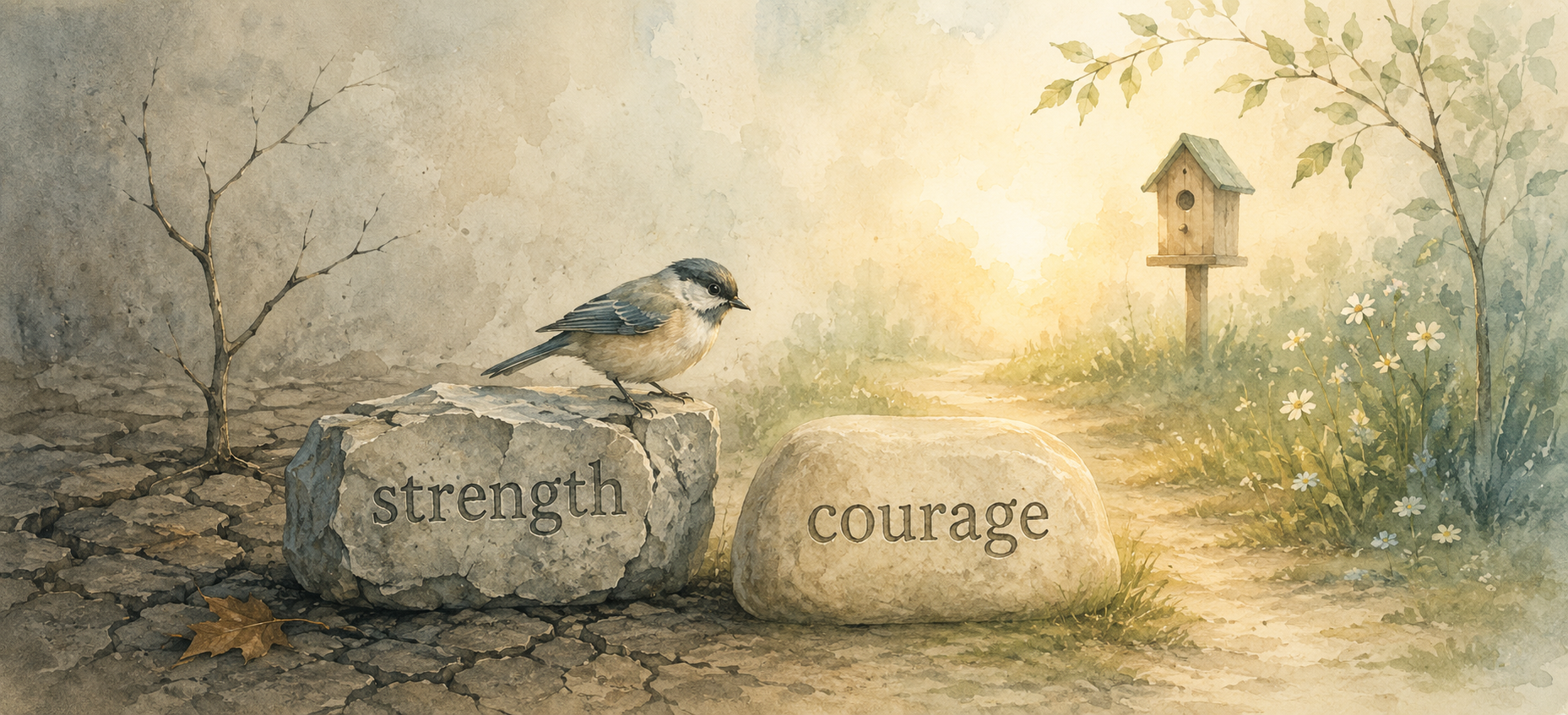
But if strength is the wall that protects us, then courage is the hand that gently opens the gate.
In my work, I often see this distinction. Many of us are strength experts. We are masters of endurance. But the path to true, lasting healing often requires a different, more vulnerable quality: the courage to stop simply enduring, and to start embracing.
What does it mean to embrace our pain?
It doesn’t mean wallowing in it or letting it define you. Rather, embracing is an act of gentle curiosity and acknowledgement. It’s the willingness to turn towards the hurt, the shame, or the fear you’ve been carrying and say, “You are there. I feel you. And I am ready to listen to what you need to tell me.”
Strength is white-knuckling your way through a panic attack.
Courage is sitting down with yourself afterwards and compassionately asking, “What was that really about? What part of me was so scared?”
Strength is pretending you’re fine so you don’t burden anyone.
Courage is admitting to a trusted person, “I’m actually not okay,” and allowing yourself to be seen in that vulnerability.
This is where healing lives. Healing isn’t about building higher walls; it’s about learning that you are safe enough to finally, gradually, lower them.
The Role of the Wounded Inner Child
This concept is deeply connected to the work of thought leaders like John Bradshaw on the inner child. Bradshaw taught that many of our adult struggles are rooted in the “carried shame” and unmet needs of our younger selves.
For a child in a painful situation, the ultimate act of strength is to suppress their feelings. They learn to “be strong” by hiding their tears, their anger, or their need for comfort in order to maintain a sense of safety or connection in their family.
That survival strength served a crucial purpose then. But as an adult, that same mechanism—numbing, suppressing, hiding—becomes the very barrier to our healing.
This is where courage comes in. It takes immense courage to reparent that wounded inner child. It means doing the very thing that felt unsafe all those years ago: to acknowledge their pain, to validate their feelings, and to offer them the compassion they never received. It’s the courage to finally feel the feelings you had to shut down in order to survive.
Strength endures the story. Courage allows you to change the ending.
So, if you see yourself as “strong but stuck,” I want you to consider this: your strength is not failing you. It has brought you to the threshold of healing. Now, it’s an act of courage to take the next step.
It takes courage to book that first counselling session.
It takes courage to speak the shameful thing out loud.
It takes courage to believe that you are worthy of a peace that doesn’t require constant endurance.
In the safe, confidential space of my Bannockburn studio, my role isn’t to give you more strength—you already have that in abundance. My role is to help you find the courage to use that strength in a new way: not to build walls, but to gently, and at your own pace, begin to take them down.
You have endured for so long. What might become possible if you began to embrace?
If the idea of connecting with your inner child resonates with you, or if you’re ready to explore how to move from endurance to embrace, please reach out. I offer a compassionate, person-centred space for individuals and couples in Bannockburn, Geelong, and the wider Golden Plains region.
This blog is my personal reflections upon my training and in no way should be used as a guide to ‘healing”
Always consult a with a healthcare professional for personalized guidance.